


When a Merbau deck is neglected long enough, it stops looking like timber altogether. The oil breaks down, the surface goes grey and chalky, mould sets in between the boards, and what was once a beautiful feature of the home just becomes an embarrassment.
That’s exactly what happened with this Earlwood home — a large multi-section Merbau deck across two levels and a connecting walkway, all with frameless glass balustrades. Beautiful bones. Just needed serious attention.
This is the full story of how we brought it back.
The Before: Years of UV Damage and Neglect
When the homeowners called us, the deck hadn’t been oiled in years. The surface had gone grey and powdery, with old oil lifting and peeling in patches. Mould and mildew had worked their way into the grain. The boards were dry, porous, and — on a Sydney summer day — uncomfortably hot underfoot.
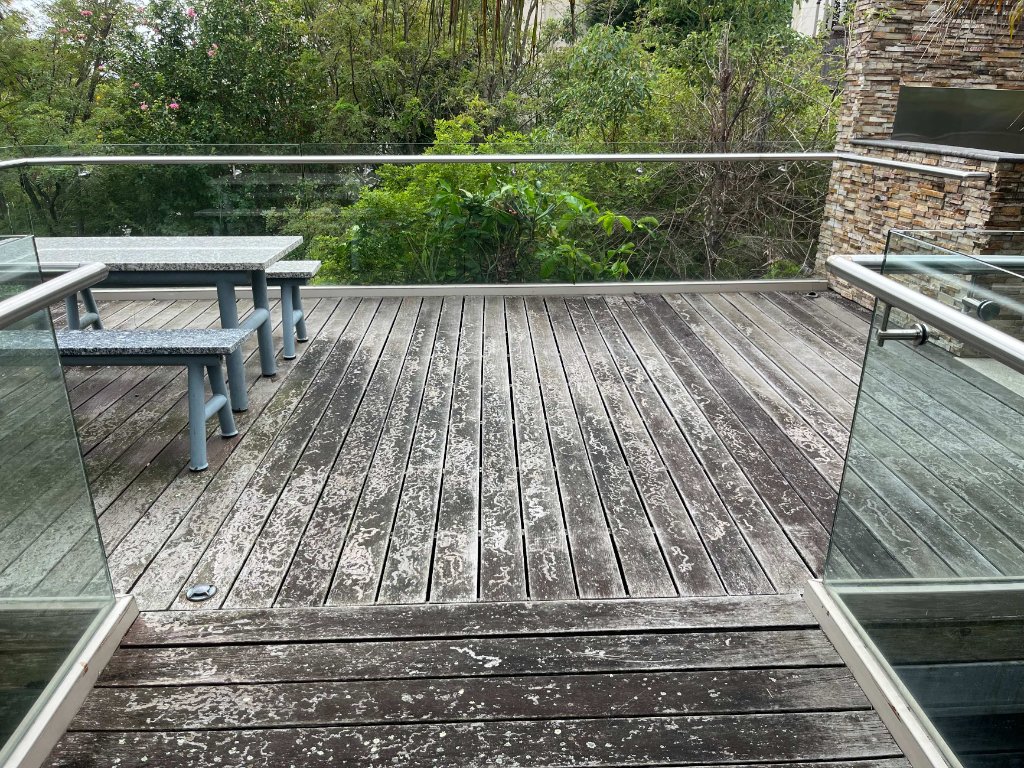
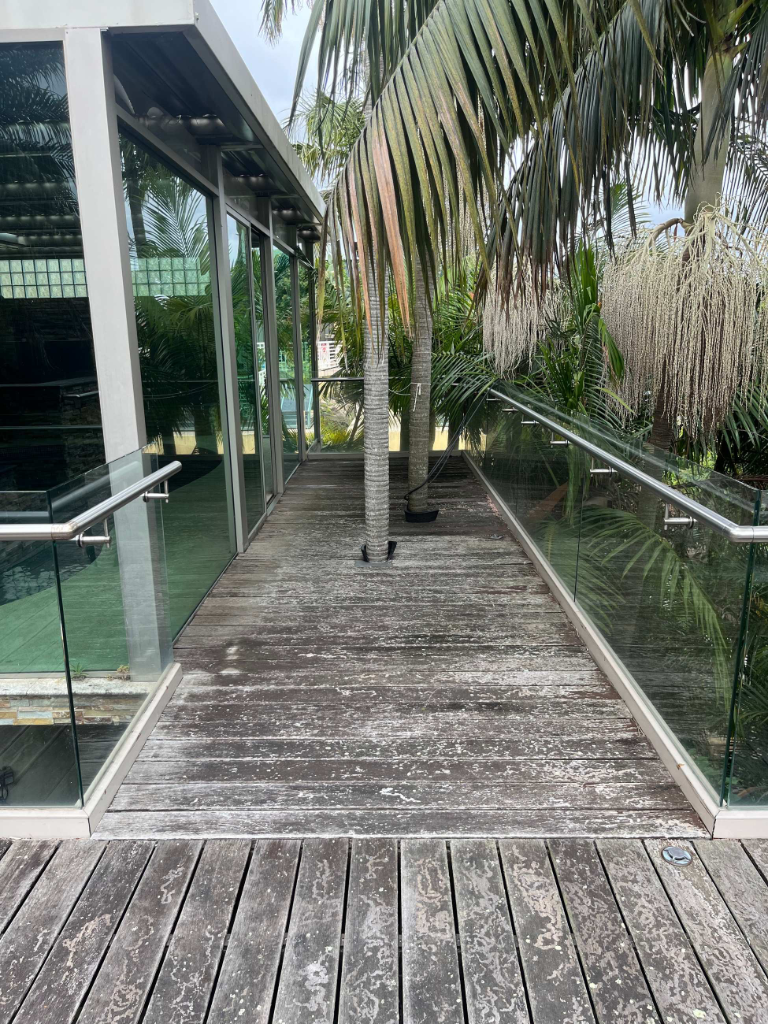
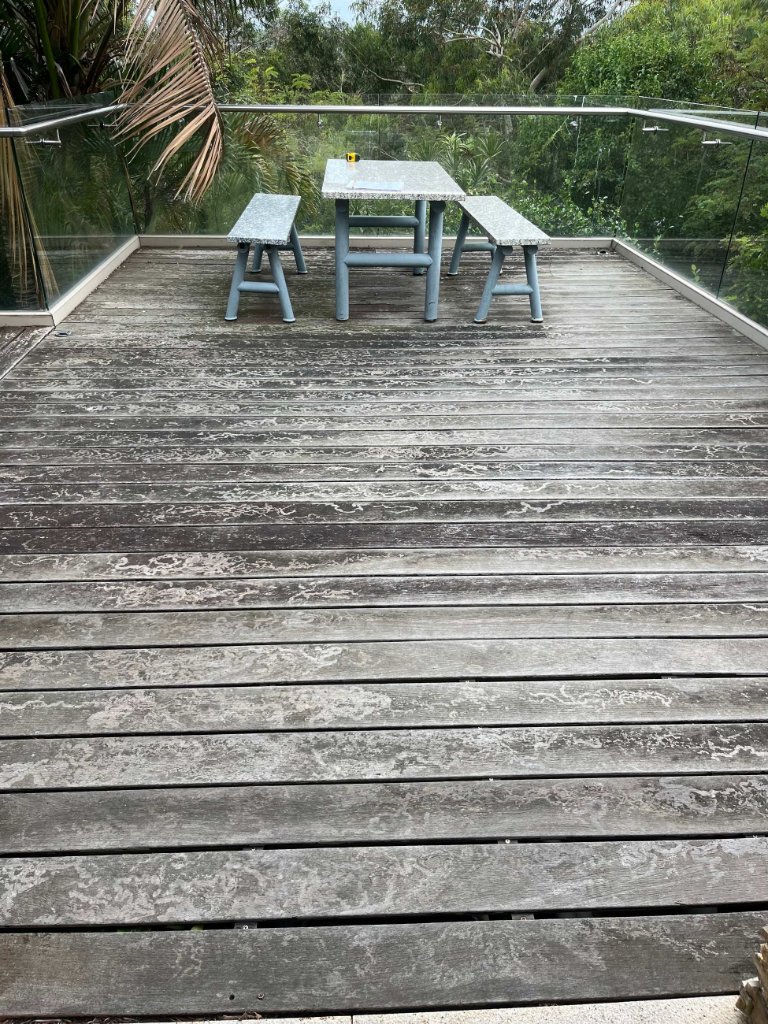
The good news? The boards themselves were structurally sound. Merbau is one of the toughest hardwoods available in Australia — Class 1 durability, naturally termite-resistant, dense enough to handle decades of abuse. This deck wasn’t at the end of its life. It just needed to be brought back properly.
Why Merbau Goes Grey — And What You Can Do About It
Merbau greys out due to UV oxidation. The sun breaks down the lignin in the surface fibres, stripping the warm reddish-brown colour and replacing it with that chalky silver-grey look. It’s not rot. It’s not structural damage. It’s surface degradation — and it’s completely reversible.
The key is sanding back deep enough to get below the oxidised layer and expose fresh timber underneath. You can’t just apply new oil over the top of a weathered surface — it won’t penetrate, it won’t bond properly, and it’ll lift again within months.
To do this job right, you need:
- A belt sander or orbital sander (we use both depending on the area)
- A pressure wash first to lift loose material and open the grain
- Multiple grit passes — starting coarse (40–60 grit) and finishing fine (80–120 grit)
- A quality penetrating oil, not a film-forming sealant
The Process: Pressure Clean, Sand, Oil
Step 1 — Pressure Wash
We started with a thorough pressure clean to remove loose debris, mould spores, and any residue sitting on the surface. This also raises the grain slightly, which actually helps the sander cut more efficiently. The deck needs to be completely dry before sanding begins — we typically allow 24–48 hours depending on weather.
Step 2 — Multi-Pass Sanding
This is where the transformation really starts. We sand across the full deck in passes, starting with a coarser grit to remove the oxidised layer and any remaining old oil, then progressively fining up to smooth the surface and open the pores for oil penetration.
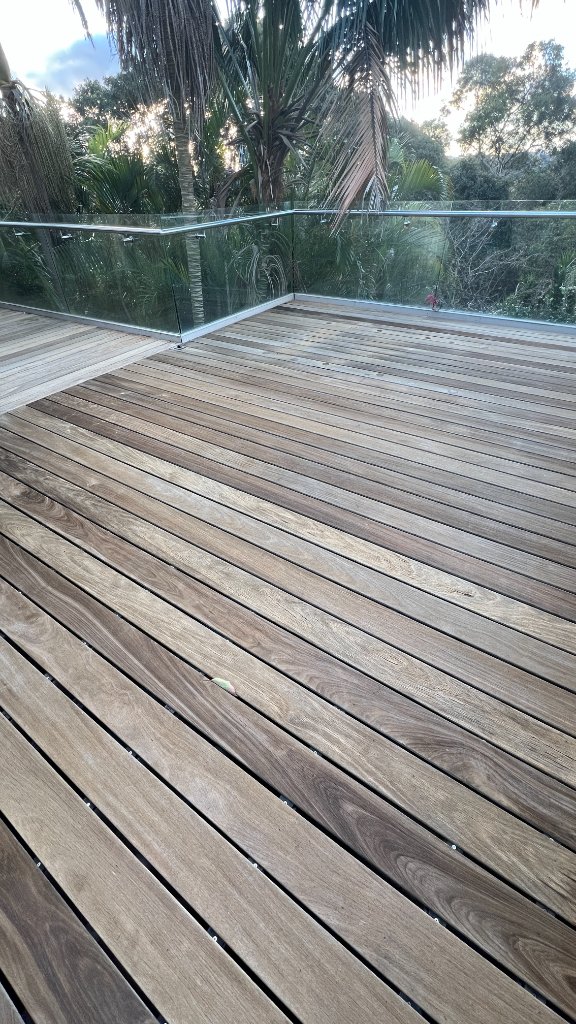
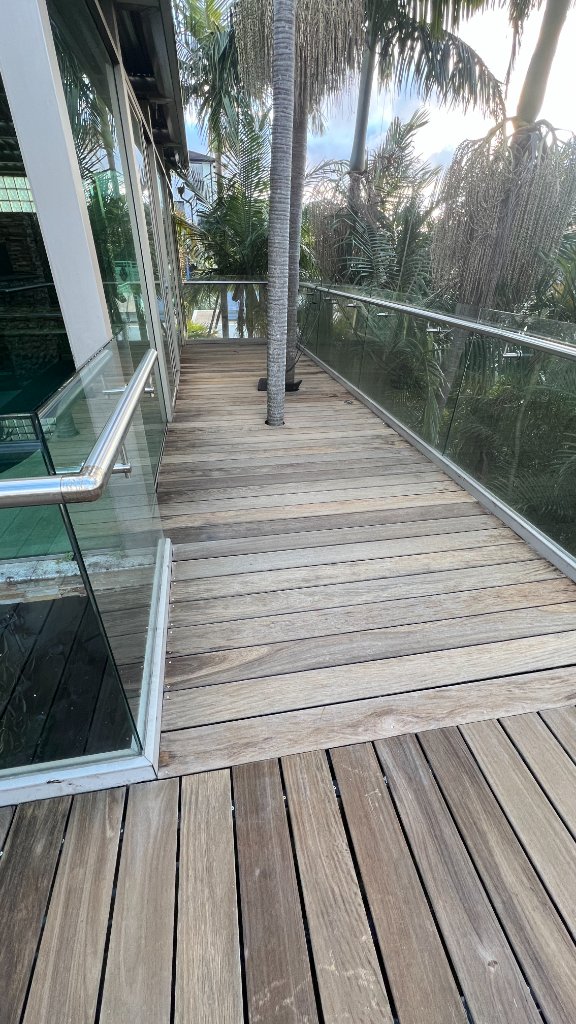
The before-and-after within a single sanding pass is always dramatic. Half the deck looking like fresh timber while the other half is still grey is one of those moments that really sells the job to a homeowner watching on.
Step 3 — Oil Application
For Merbau, we use a penetrating hardwood oil — not a surface sealant. Merbau is naturally high in tannins and oils, which means it needs a product specifically formulated to bond with iron-rich, oily hardwood. We apply two coats with a brush or roller, working with the grain, allowing full absorption between coats.
The oil soaks in and brings out the deep reddish-brown colour that Merbau is known for. On freshly sanded boards, the result is remarkable.
The After: Completely Transformed
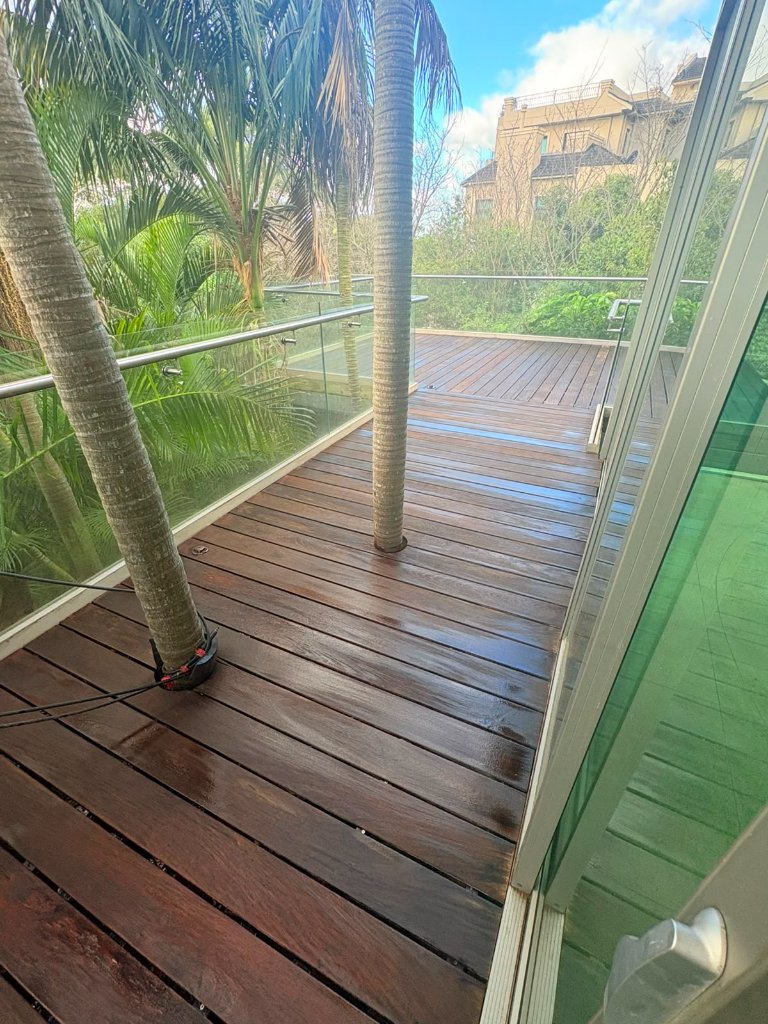
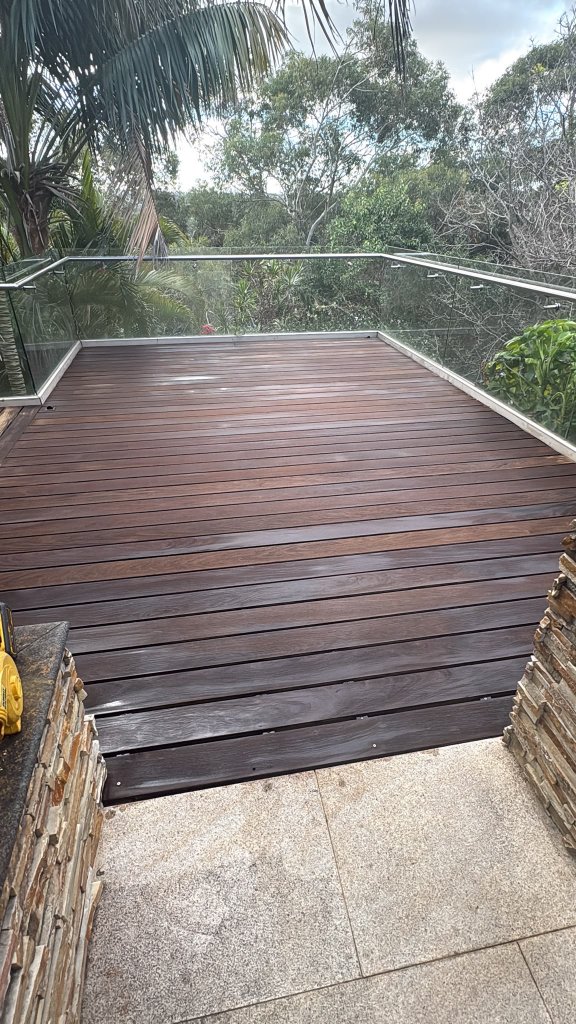
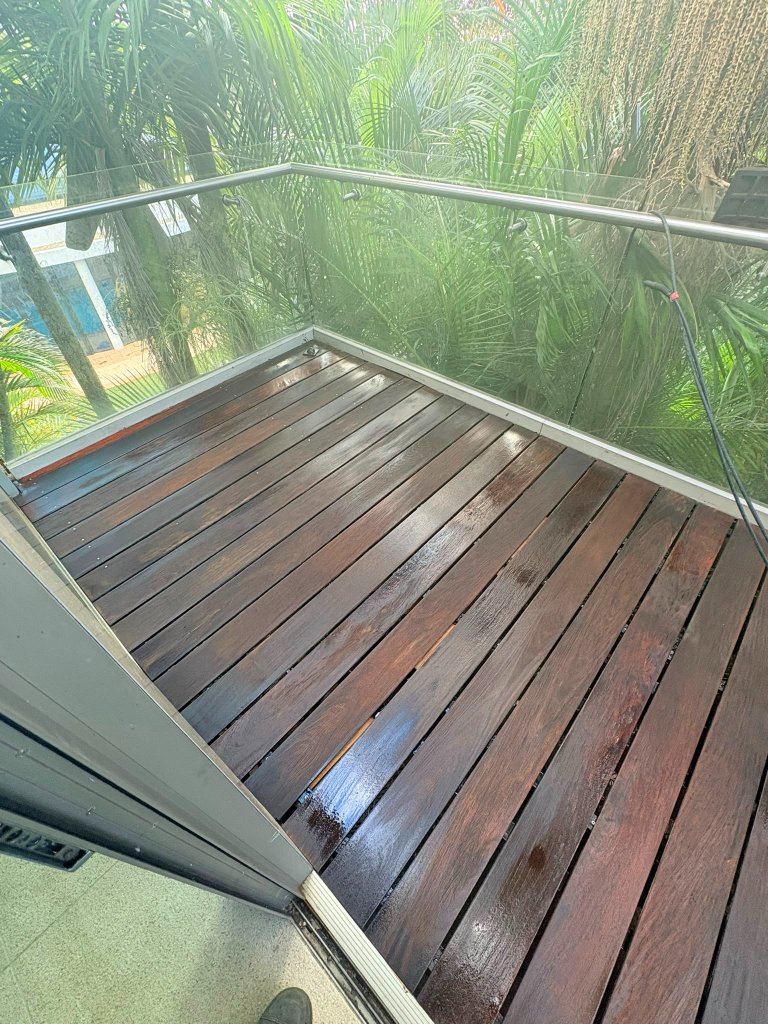
The transformation speaks for itself. Same deck, same boards, same structure — just properly restored. The homeowners now have a deck that looks brand new, is protected against UV and moisture, and will hold its colour for 12–18 months before the next oil is needed.
How Much Does Merbau Deck Restoration Cost in Sydney?
At 5 Star Decking, our standard Merbau deck restoration service — pressure clean, sand, and oil — is priced from 50/m².
For a project of this size (multi-level deck across three areas), total investment typically ranges from ,500 to ,500 depending on the condition of the boards and accessibility. It’s a fraction of the cost of replacement — and for a deck with solid structural bones like this one, restoration is always the smarter financial decision.
How Often Should You Oil a Merbau Deck?
Once properly restored, a Merbau deck should be oiled every 12–18 months in Sydney’s climate. The UV load in Greater Sydney is high, and the city’s humidity swings between wet winters and dry summers — both of which accelerate surface degradation if the timber isn’t protected.
Signs it’s time to re-oil:
- Water no longer beads on the surface (it soaks straight in)
- Colour has shifted noticeably towards grey
- Surface feels rough or dry underfoot
- Visible cracking or splitting appearing in the boards
If you catch it early, a clean and re-oil is enough. If it’s been left too long (like this Earlwood project), sanding back is required. Either way — it’s fixable.
Get a Free Quote for Deck Restoration in Sydney
We restore Merbau, Spotted Gum, Blackbutt, and Ironbark decks across Greater Sydney including the Inner West, Canterbury-Bankstown, Eastern Suburbs, and South Sydney.
📞 Call us: 0433 334 415
📋 Get a free restoration quote →
🏛️ NSW Contractor Licence: 395250C
Fixed prices. No surprises. We tell you exactly what we’ll do and what it’ll cost before we start.

