


If you’ve just had a merbau deck installed — or you’re getting ready to oil an older one — there’s one step homeowners skip more than any other, and it’s the one that makes or breaks the finish: removing the tannins before you coat it. Merbau is one of the most popular hardwood decking choices in Sydney for good reason. It’s dense, durable, naturally resistant to rot and borers, and it develops a rich reddish-brown colour that looks incredible on a balcony or entertaining area. But merbau is also notorious for one thing — tannin bleed.
Skip the prep and you’ll end up sealing those tannins straight into the timber, or worse, watching them weep out later and stain your tiles, pavers or render. Here’s exactly how we do it on every merbau job, and how you can maintain it yourself between our scheduled services.
Why Merbau “Bleeds” Tannins

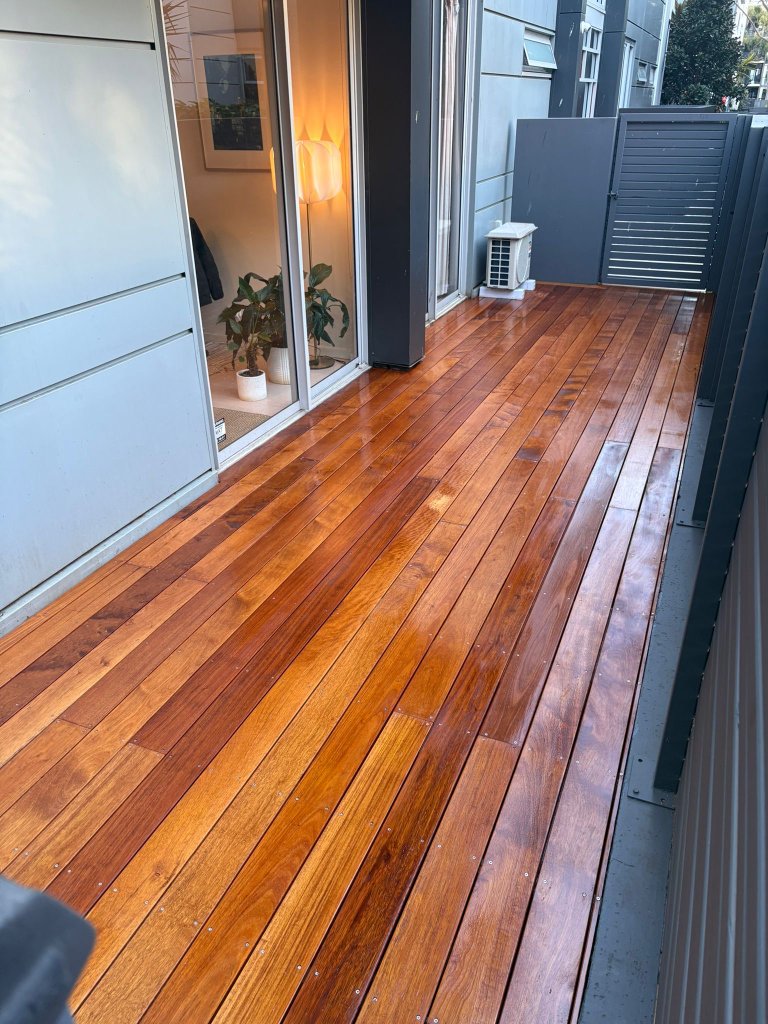
A recent merbau balcony project — cleaned, tannins removed and freshly oiled for a rich, even finish.
Tannins are natural compounds found in hardwoods like merbau, and they’re actually part of what makes the timber so durable and pest-resistant. The trade-off is that when merbau gets wet — from rain, sprinklers, or even the first hose-down after installation — those tannins leach out to the surface as a dark, reddish-brown residue. You’ll often see it pooling at the low points of a deck or staining the concrete and pavers around the edges.
This is completely normal for new merbau and it does settle down over the first few months, but if you oil over a deck before the tannins have been properly cleaned off, you trap discolouration and residue under the coating — leading to a blotchy, uneven finish that never looks quite right.
Step 1: Let the Deck Weather Briefly (New Installs)
For brand-new merbau decking, we recommend allowing 2–4 weeks of natural weathering before the first proper clean and oil. This gives the initial heavy tannin bleed a chance to occur and partially wash out naturally with rain. Trying to oil a deck within the first week almost always results in tannin staining trapped under the coating.
Step 2: Clean With a Dedicated Tannin/Timber Cleaner
A garden hose alone won’t cut it. We use a purpose-made timber deck cleaner (oxalic acid-based cleaners work particularly well on merbau) applied with a soft-bristle broom or deck brush, working in the direction of the grain. This lifts out surface tannins, mill residue, dirt and grey weathering that builds up on exposed hardwood.
For established decks that are being recoated, this step also removes any old, flaking oil and opens the grain back up so the new coat can actually penetrate rather than sitting on the surface.
Step 3: Rinse Thoroughly and Let It Dry Out
After cleaning, the deck needs a thorough fresh-water rinse to flush the lifted tannins and cleaning residue completely off the boards — and off any surrounding pavers, glass balustrades or tiles before it has a chance to dry and stain. Then comes the part everyone wants to skip: drying time. Merbau needs to be genuinely dry — not just surface-dry — before oiling. In Sydney’s climate we generally allow 48–72 hours of dry weather, longer in winter or humid periods. Oiling over damp timber traps moisture under the coating and leads to premature failure.
Step 4: Light Sand if Needed
On decks with old, worn coatings or rougher weathered timber, a light sand (never too aggressive — you’re not trying to remove material, just smooth the surface and open the grain) between 80–120 grit gives the oil the best possible surface to bond to. This step is skipped on newer decks that just need their first coat.
Step 5: Apply a Quality Decking Oil
Once the timber is clean, dry and (if needed) sanded, we apply a penetrating decking oil formulated for hardwoods — applied thin, in 2 coats, allowing proper drying time between coats. A good hardwood decking oil does three things: it feeds UV-stabilisers into the timber to slow greying, it seals the surface against moisture, and it deepens and evens out merbau’s natural colour rather than leaving it patchy.
The result — as you can see on this recent balcony project we completed — is a rich, even, glossy finish with no blotching, no trapped tannin staining, and a deck that’s properly protected against Sydney’s sun and rain for the season ahead.
How Often Should You Recoat Merbau?
For most Sydney homes we recommend a full clean and recoat every 12–18 months, depending on sun exposure. North-facing decks and balconies that cop full sun most of the day will need it closer to the 12-month mark; shaded or covered areas can often stretch to 18–24 months. Skipping recoats doesn’t just affect appearance — once the oil breaks down, merbau greys and the timber can start to check and split without the protective barrier.
DIY vs Professional Cleaning & Oiling
You can absolutely maintain your own merbau deck between professional services if you’ve got the time and the right products. Where most DIY jobs go wrong is rushing the drying time, using a cleaner that’s too harsh (or not strong enough to properly lift tannins), or applying oil too thick in one heavy coat instead of two thin ones. If you’d rather it was done properly the first time — or your deck has heavy tannin staining, greying or flaking coating — our team handles the full clean, tannin treatment, sand and oil process as part of our maintenance services across Sydney.

Get Your Merbau Deck Looking Its Best
Whether it’s a brand-new install that needs its first proper clean and coat, or an older deck that’s due for restoration, we can get your merbau back to looking like the photos above — rich, even colour with a durable, professional finish. As a licensed NSW builder (Licence #395250C), we’ve been getting this process right on Sydney decks for years.
Get in touch via our contact page or call 0433 334 415 to book a deck clean, tannin treatment and oil service, or to discuss a new merbau deck installation.

