


Most decks in Sydney do not fail overnight. They go grey, a board flexes underfoot, a nail head lifts, and one day you notice a joist has gone soft where the water always pools. The question every homeowner reaches at that point is the same: do you repair it, restore it, or pull the whole thing out and start again? This guide walks you through how to tell the difference, what each option costs and takes, and when a repair is honestly throwing good money after bad.
5 Star Decking has repaired, restored and rebuilt decks across Sydney for years, from timber balconies in the Eastern Suburbs to hardwood entertainers on the North Shore. Here is how we assess an ageing deck, and how you can do a first pass yourself before you call anyone.
Repair, restore or replace: what is the actual difference?
A repair fixes specific broken parts of an otherwise sound deck. A restoration brings a structurally healthy but tired-looking deck back to life. A replacement removes and rebuilds the deck because the frame or a large share of the boards can no longer be trusted. Getting the category right is the whole game, because paying to restore a deck that needs replacing just delays the real bill and can put people at risk in the meantime.
Here is the quick way to place your deck in the right bucket:
- Repair when the frame is solid and only a handful of boards, fixings or a section of railing has failed.
- Restore when everything is structurally sound but the surface is grey, splintering, or the coating has worn off.
- Replace when the joists or bearers are rotten, the deck moves, or more than roughly a third of the boards are past saving.
Signs your Sydney deck needs repair (not just a clean)
A deck that needs repair usually gives you clear warnings before anything dangerous happens. The frame is still doing its job, but individual parts have given out. If you can tick off a few of these, a targeted repair is likely all you need.
- One or two boards that flex, crack or have visibly rotted at the ends.
- Nail or screw heads lifting proud of the surface (called nail pop), or fixings that have rusted and stained the timber.
- A wobbly section of balustrade or handrail, or a loose post.
- A soft or spongy spot in a small, contained area rather than across the whole deck.
- Gaps or movement around a stair stringer or a single ledger fixing.
Sydney’s climate is hard on timber. Coastal salt air in suburbs like Coogee, Maroubra and Bondi accelerates fixing corrosion, while shaded, damp yards on the North Shore hold moisture in the frame long after rain. Boards near a pool, a downpipe or a garden bed almost always go first because they stay wet the longest. If the damage tracks these wet zones and the rest of the deck feels firm, you are almost certainly in repair territory. Our guide on the best decking for pool areas in Sydney covers why those spots fail early.
When restoration makes sense (and when it is a waste)
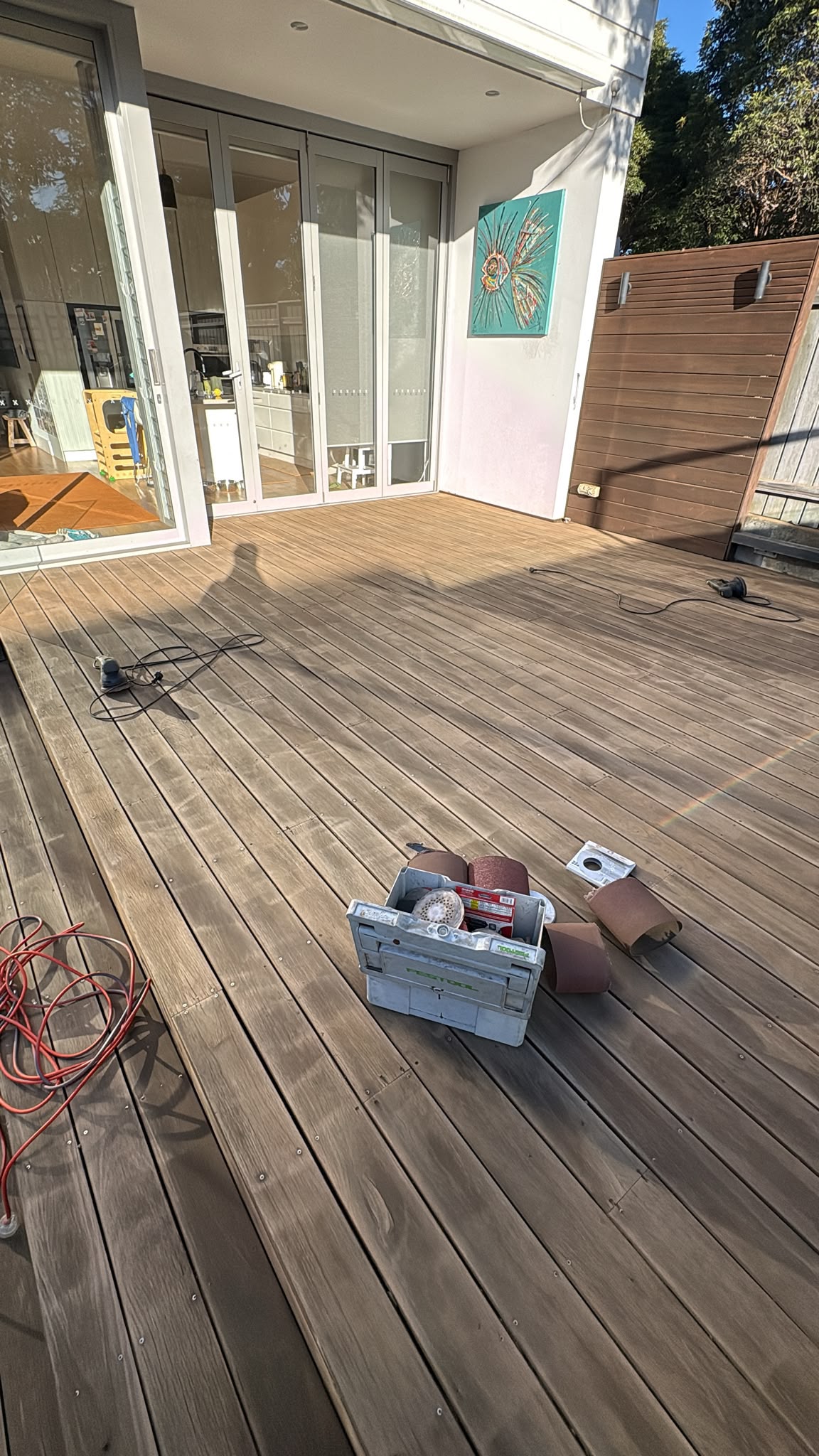
Restoration is for a deck that is structurally fine but looks tired. If the boards are grey and rough but still solid when you press on them, and the frame underneath is sound, you can often sand back the surface, replace a few end-of-life boards and re-oil or re-coat the whole thing for a fraction of a rebuild. A good restoration can take five to ten years off the look of a deck.
The trap is spending on restoration when the problem is underneath. Sanding and oiling a grey deck does nothing for a rotten joist, and it hides the warning signs you would otherwise have seen. Before any restoration, the frame has to be inspected from below. If the bones are good, restore with confidence. If they are not, that money is better put toward a rebuild. We cover the ongoing side of this in our Sydney deck maintenance guide, and the DIY version in how to maintain and oil your timber deck like a pro.
Repair vs replace: how to decide
The honest rule of thumb: repair when the frame is sound and the damage is contained, replace when the structure is compromised or the repairs would cost close to a rebuild. Replacement wins the moment safety is in question, because a deck that fails while people are standing on it is not a risk worth managing.
Lean toward replacement when you see any of these:
- Rot in the joists, bearers or posts, not just the surface boards.
- The whole deck bounces, sways or pulls away from the house.
- The ledger board (where the deck attaches to the house) is rotten or poorly fixed. This is the single most common cause of catastrophic deck collapse.
- More than about a third of the boards are cracked, cupped or rotten.
- The deck was never built to code and cannot be brought up to standard through repairs alone.
Lean toward repair or restoration when the frame is healthy, the deck feels solid, and only surface elements or a small number of parts have failed. When the numbers are close, weigh the age of the deck too: pouring repair money into a deck already near the end of its natural life rarely pays off. Our article on how long decking lasts in Sydney puts real timeframes on timber and composite, and when to repair vs replace your deck goes deeper on the trade-off.

What deck repairs cost in Sydney
Small repairs, such as replacing a few boards, re-fixing a railing or dealing with an isolated soft spot, typically land in the low hundreds to a couple of thousand dollars depending on access and timber type. A full restoration (sand, replace end-of-life boards, re-coat) usually runs into the low thousands. A replacement is priced like a new deck, which is where the earlier options start to look like value if the frame is genuinely sound.
Prices swing based on the timber species, how hard the deck is to reach, whether the frame needs work you cannot see from above, and how much of the original deck is salvageable. That last point is why an on-site inspection matters so much: two decks that look identical from the top can need very different work underneath. If you want to understand why quotes vary so widely, our breakdown of why deck quotes are so different in Sydney explains the real reasons, and our 2026 Sydney decking cost guide covers full rebuild pricing.
Frequently asked questions about deck repairs in Sydney
How do I know if my deck is safe to walk on?
Check the frame from below for soft, dark or crumbling timber, especially where the deck meets the house. Above, look for boards that flex, a deck that sways when you push on the railing, and lifted or rusted fixings. If the deck moves as a whole or you find rot in the joists, keep people off it and have it inspected before use.
Can you repair just part of a deck?
Yes. If the frame is sound, individual boards, sections of railing, stair treads and failed fixings can all be replaced without rebuilding the whole deck. New boards are matched to the existing timber as closely as possible, though older weathered boards will always differ in colour until the new timber ages in.
Is it cheaper to repair or replace a deck?
Repair is almost always cheaper up front. It stops being the smart choice when the frame is compromised or when the combined repairs approach the cost of a new deck. At that point a replacement gives you a fresh warranty and decades of life, rather than patching a deck that will keep failing.
How long does a deck last in Sydney?
A well-built and maintained hardwood deck can last twenty years or more in Sydney, while composite can last longer with less upkeep. Coastal salt air and damp, shaded yards shorten that if the deck is not looked after. See our full guide on how long decking lasts in Sydney for timber and composite lifespans.
Do you offer deck repairs across all of Sydney?
Yes. 5 Star Decking repairs, restores and rebuilds decks across Sydney, including the Eastern Suburbs, Inner West, North Shore, Northern Beaches and the Sutherland Shire.
Not sure which one you need? Get a quote booked
The only reliable way to know whether your deck needs a repair, a restoration or a full replacement is to have the frame inspected on site. We will tell you honestly which option makes sense and what it will cost, with no pressure to over-spend on a rebuild you do not need.
Book your deck inspection and quote and we will get your deck back to safe, solid and looking its best.

