


Choosing a new deck is one of the best upgrades you can make to a Sydney home, but almost every homeowner hits the same fork in the road. Do you go with natural timber or modern composite? Both build beautiful outdoor spaces, yet they behave very differently once the Sydney sun, salt air and summer storms get to work on them.
This guide breaks down the real differences in looks, cost, maintenance and lifespan so you can walk into your quote conversation knowing exactly what you want. No sales spin, just the honest trade offs we talk through with clients every week.
The choice most Sydney homeowners wrestle with
When people call us, the question is rarely “should I build a deck”. It is “composite or timber”. The answer depends on how you live, how much upkeep you are willing to do, and how long you plan to stay in the home. Timber wins hearts on warmth and price. Composite wins on low maintenance and longevity. Neither is universally better, so the goal is to match the material to your lifestyle and your block.
Let us look at each option properly.
Timber decking: pros, cons, cost and maintenance
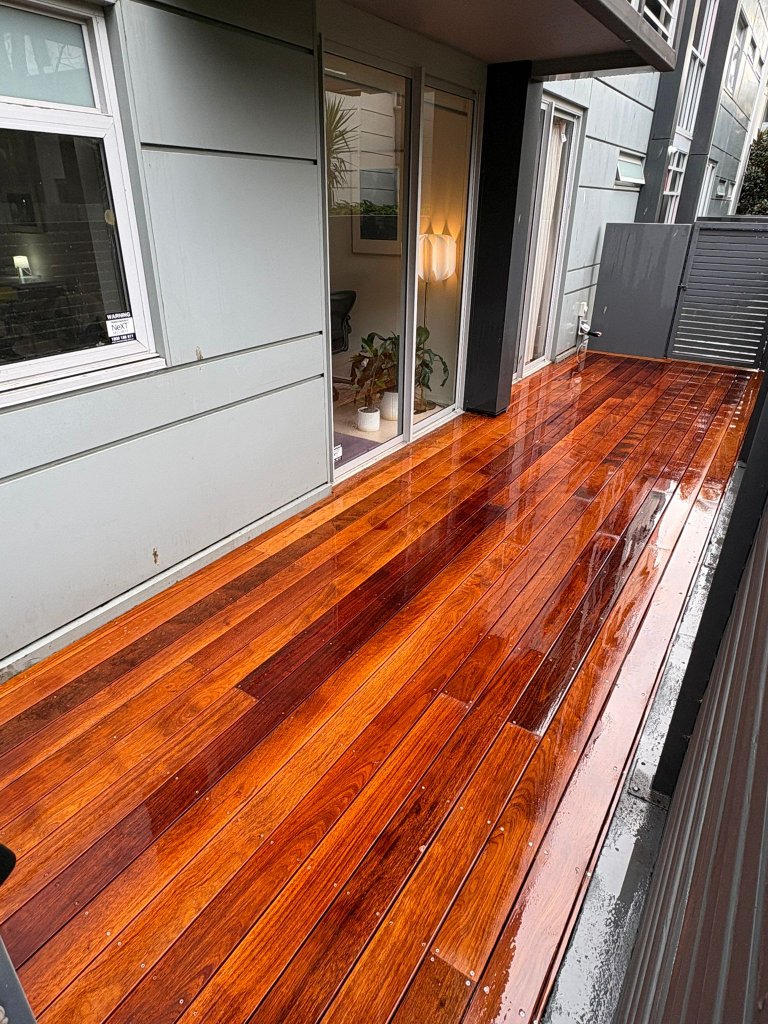
Hardwood timber such as Merbau, Blackbutt and Spotted Gum has been the classic Australian decking choice for generations. There is a reason it stays popular.
The pros
- Genuine natural grain and warmth that composite still cannot fully match
- Lower upfront cost per square metre than most composite boards
- Can be sanded back and re oiled to look new again years down the track
- Cooler underfoot than some dark composite boards in direct summer sun
The cons
- Needs regular oiling, usually every 12 to 18 months in Sydney conditions
- Will grey, split or cup over time if maintenance is skipped
- More vulnerable to moisture, salt and insects near the coast
Cost and maintenance
Timber is friendlier on the initial budget, but that saving comes with an ongoing commitment. Plan for a weekend of cleaning and oiling roughly once a year, plus the cost of quality decking oil. If you enjoy that ritual and love the look of natural wood, timber rewards you. If the thought of annual upkeep fills you with dread, keep reading.
Composite and Trex decking: pros, cons, cost and maintenance

Composite decking, including premium brands like Trex, is made from a blend of recycled timber fibres and plastic. It is engineered specifically to remove the pain points of natural wood.
The pros
- No oiling, sanding or staining ever, just an occasional wash
- Resists fading, staining, splitting and rot far better than timber
- Splinter free and easy on bare feet, great for families and pets
- Consistent colour and finish across every board
- Long manufacturer warranties, often 25 years or more
The cons
- Higher upfront cost per square metre than most timbers
- Some darker boards can get warm in full afternoon sun
- The finish is uniform, which some people prefer over natural variation and others do not
Cost and maintenance
You pay more at the start, then almost nothing across the life of the deck. A hose down and the occasional soapy scrub is the entire maintenance routine. For busy households that would rather spend weekends enjoying the deck than caring for it, composite is hard to beat.
How Sydney climate and conditions affect the choice
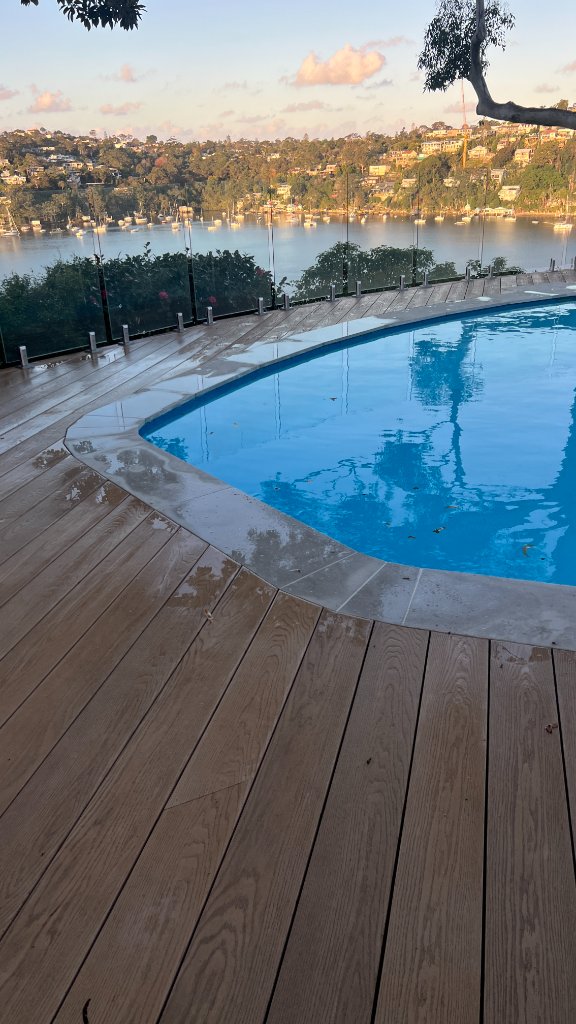
Sydney throws a lot at an outdoor deck. Intense UV, humid summers, sudden downpours and, for eastern and northern suburbs, salt laden coastal air. Each of these factors nudges the decision.
- Coastal homes: Salt air is tough on timber and accelerates greying and wear. Composite handles the coast with far less fuss, which is why it is so popular around Maroubra, Randwick and the Northern Beaches.
- Poolside decks: Constant splashing, sunscreen and chlorine punish natural timber. Composite shrugs it off and stays splinter free for bare feet.
- Leafy suburbs: Under heavy tree cover with damp shade, timber needs vigilant upkeep to avoid mould and rot. Composite is more forgiving.
- Sun drenched, open yards: Both materials cope, though lighter composite tones or well oiled timber keep surface temperatures more comfortable.
Cost over 10 years: upfront versus ongoing
The sticker price only tells half the story. To compare fairly, look at what each deck costs you across its life.
Timber: Lower to build, but add the cost of oil, cleaning products and your time roughly once a year for a decade. Those annual sessions add up, both in dollars and weekends.
Composite: Higher to build, then next to nothing to maintain. No oil, no sanding, no replacing warped boards. Over 10 to 15 years, the gap between the two often narrows or closes entirely once ongoing upkeep is factored in.
If you plan to stay in your home long term, the total cost of composite becomes very competitive. If you are on a tighter build budget now and enjoy hands on maintenance, timber makes sense.
Which suits which home and lifestyle

Here is the simple way we help clients decide.
Choose timber if you:
- Love the authentic look and warmth of natural wood
- Have a lower upfront budget
- Do not mind an annual maintenance weekend
- Enjoy the character that develops as timber ages
Choose composite if you:
- Want a set and forget deck with minimal upkeep
- Live near the coast, a pool or under heavy tree cover
- Have a busy household, young kids or pets
- Plan to stay long term and value the long warranty
Explore your options with the right service page
Ready to go deeper on the material you are leaning toward? We have dedicated pages for both, covering board options, finishes and pricing for Sydney homes.
- Composite decking in Sydney for low maintenance, long lasting boards including Trex.
- Timber decking in Sydney for classic hardwood decks with natural grain and warmth.
Still not sure? Let us help you decide on site
The best way to settle the composite versus timber question is to look at your actual space. Our team walks your yard, considers your aspect, budget and how you want to use the deck, then gives honest advice on which material fits best. No pressure, no obligation.
Book a free on site consultation with 5 Star Decking and get expert guidance tailored to your home and lifestyle.

